
Article: Nylon, Polyester and Spandex: What Activewear Fabric Actually Means

Nylon, Polyester and Spandex: What Activewear Fabric Actually Means
Fabric labels list percentages, like "80% nylon, 20% elastane," without explaining what those numbers actually change. This is what each fibre does in the blend.
Nylon
Nylon is valued in activewear for three things: it's strong for its weight, it dries fast, and it has a smoother, slightly silkier feel than polyester. It also takes dye well, which is part of why nylon-based leggings tend to hold richer colour through repeated washes than polyester ones.
The trade-off: nylon breaks down a little faster than polyester under prolonged UV exposure. That matters less for gym or everyday wear, and more for pieces used a lot outdoors.
Polyester
Polyester is the other common structural fibre in activewear. It resists UV damage and pilling better than nylon, and it wicks moisture differently, pulling sweat to the surface to evaporate rather than absorbing it.
Polyester-heavy blends are common in pieces built for higher-sweat activity or frequent outdoor use.
Spandex and elastane
Spandex and elastane are two names for the same fibre. Elastane is used more often in Europe, spandex more in North America. On its own it isn't durable enough for a garment, which is why it's always blended with nylon or polyester at a smaller share, usually 5% to 25% across the VEVAwear range.
Its job is stretch and recovery: how far the fabric can stretch, and how fully it returns to its original shape afterward. A higher elastane share generally means a more compressive, second-skin fit; a lower share means a softer drape.
Why the ratio changes by product type
A pair of leggings meant to hold its shape through a workout needs a higher elastane percentage than a relaxed pair of capri pants. Fitted pieces such as leggings, sports bras and fitted tops tend to run higher in elastane, while looser silhouettes use less.
That's not a quality difference. It's the blend matched to how the piece is meant to fit and move.
Where cotton fits in
Cotton isn't a performance fibre in the same sense. It absorbs moisture rather than wicking it away, and it has far less stretch recovery than nylon or polyester blends.
That's why it shows up in a different part of the range instead, hoodies, jackets and loungewear, where softness and breathability at rest matter more than stretch and moisture management while training. A cotton-polyester jacket, for example, trades some stretch for a softer, warmer feel.
Reading a fabric label
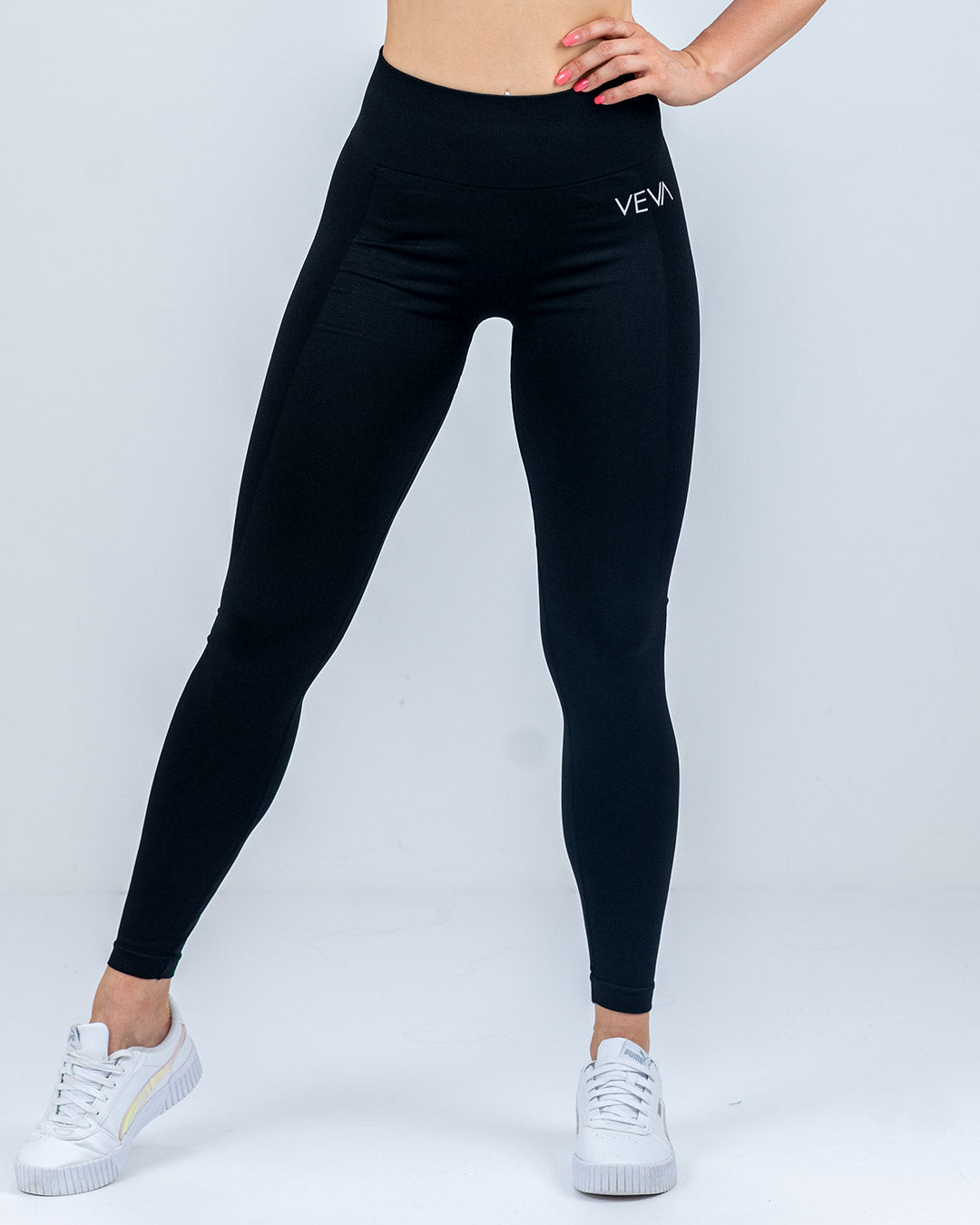
The pattern to look for: the first, larger percentage is the structural fibre doing the strength and shape work, nylon or polyester. The second, smaller percentage is the elastane or spandex doing the stretch work.
A jacket listing "51% cotton, 49% polyester" is a comfort-first blend. A legging listing "80% nylon, 20% elastane" is a performance-first blend built to move and recover. Every VEVAwear product page lists this exact breakdown, so it's always possible to check before buying.
For sizing and care on top of fabric, see the full activewear guide, or go straight to how to wash and care for activewear.